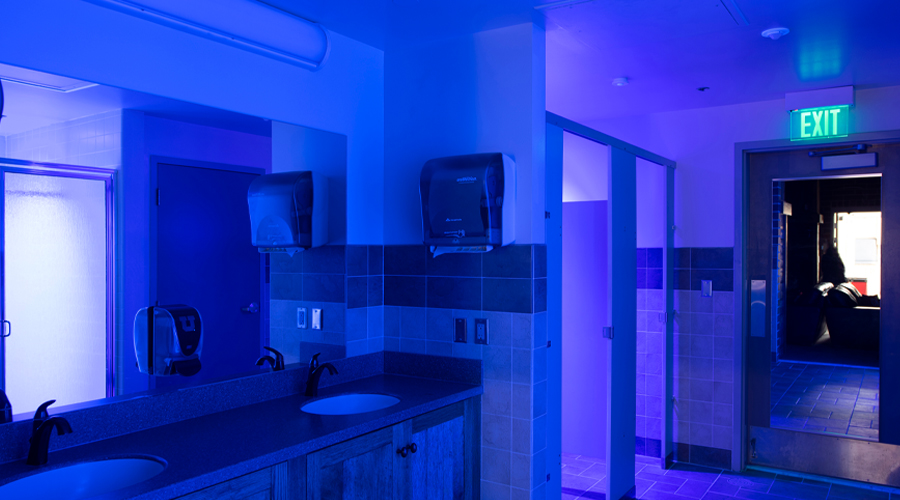
Narrow Spectrum Lighting
Utilizing Peak Wavelengths for Peak Performance
Narrow Spectrum Lighting uses generated light energy limited to targeted bandwidths for the purpose of improving technical performance or visual acuity, while often supporting sensitive processes occurring within the environments into which they’re installed. Its use is particularly beneficial across a range of applications, including healthcare and behavioral health settings, semiconductor and pharmaceutical manufacturing, and vivarium research and wildlife protection.
As the study of narrow spectrum wavelengths progresses, it is likely that additional bandwidths will be identified for a variety of uses in lighting sensitive and challenging environments. It’s part of Kenall’s DNA to respond to this evolving landscape by developing cutting edge lighting solutions that fully support your most challenging and sensitive lighting environments, as well as the processes that occur within them.
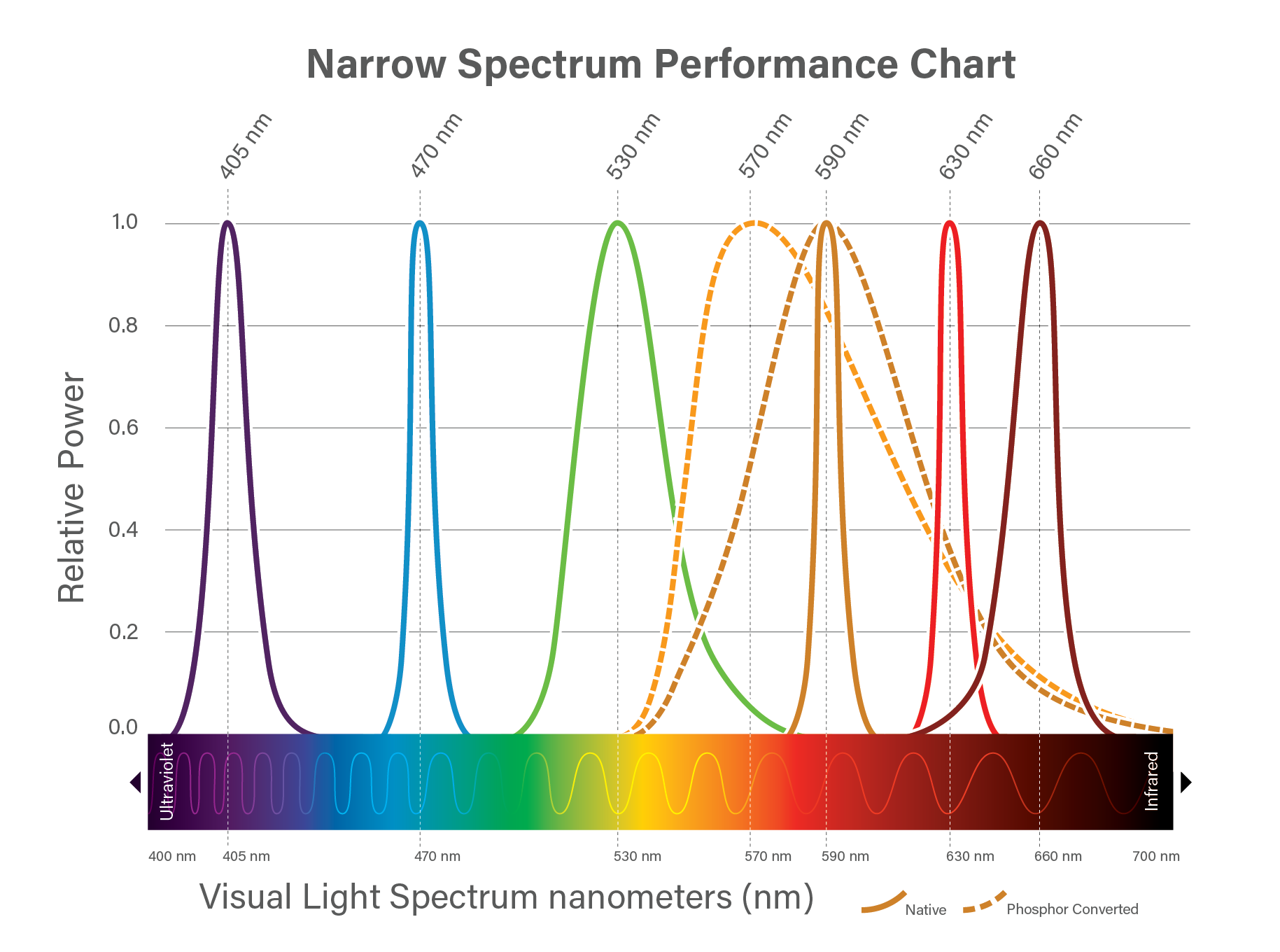

Native vs Phosphor Converted
Native narrow spectrum and phosphor-converted narrow spectrum LEDs both produce light at a specific wavelength. How they go about it, however, differs.
Native narrow spectrum light sources offer optimal control over spectral emissions. As an example, while there are many laboratory and pharmaceutical manufacturing applications that can utilize PC amber for its higher light output, in certain cleanroom applications PC amber is unacceptable; the specification will call for native amber since it requires absolute cutoff of shorter wavelengths and can accept the lower lumen output levels. The same would be true for coastal areas common to sea turtles, where short wavelength light – below 560 nm – may disorient hatchlings and cause them to veer toward the danger of a highway rather than the ocean, making native amber light sources the recommended choice.