
Protecting the Wildlife We Love with the Right Wavelengths of Light
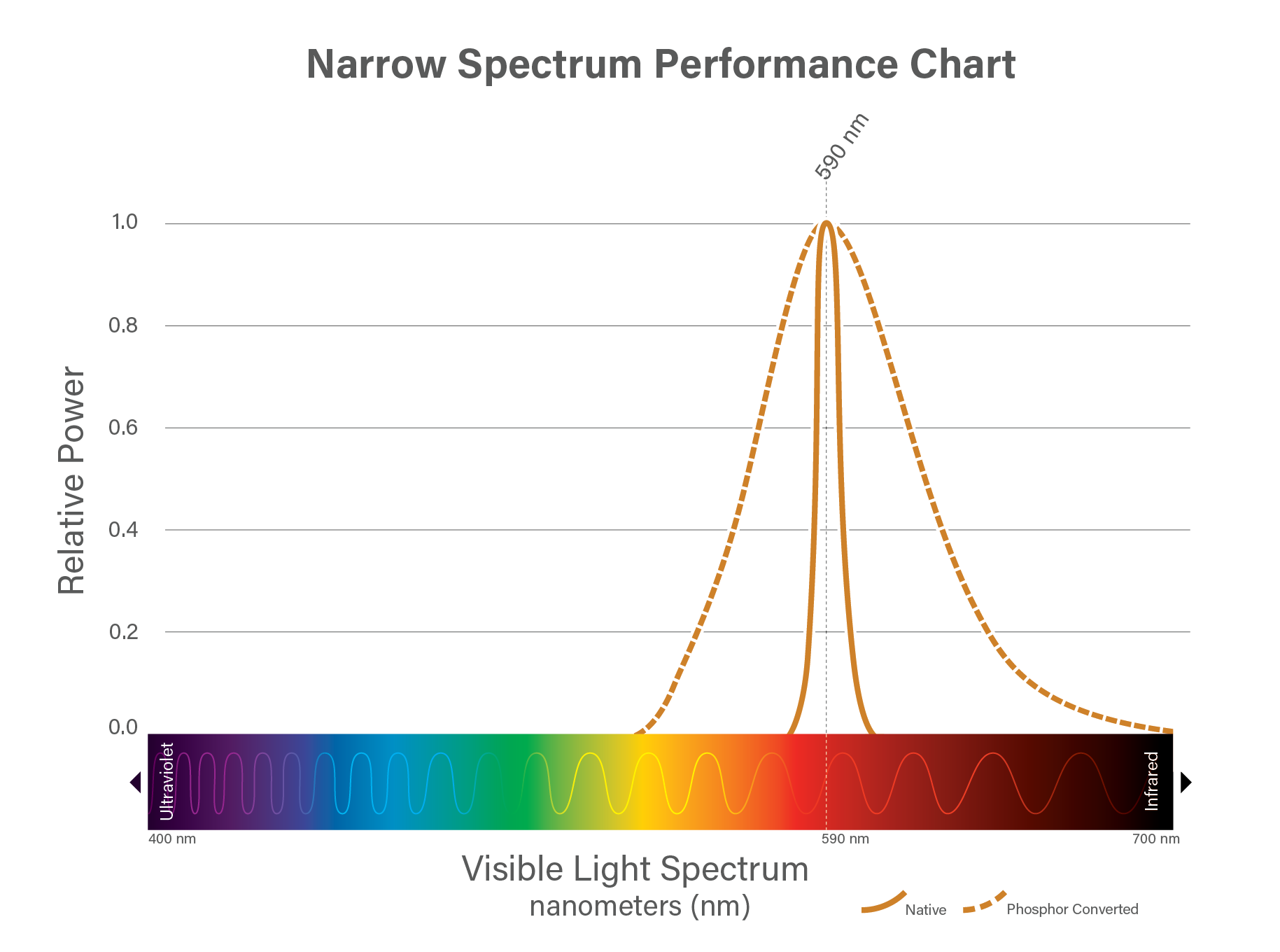
Confused and disoriented by traditional white lighting, which increases their risk of death, sea turtle hatchlings depend on natural moonlight to successfully navigate from their nests to the ocean. Long wavelengths of native amber light, including 590 nm, protect nesting populations by supporting this nest to ocean transition. Compliance guidelines issued by the Florida Fish and Wildlife Conservation Commission (FWC) include lighting and are designed to protect nesting populations along Florida’s coastline, where 90% of sea turtle nesting occurs.
In addition to sea turtles, amber lighting helps protect other species of wildlife, including birds, frogs, bats, and small mammals. To optimize this protection, shielding, dimming, and timing controls should also be considered when lighting wildlife habitats.
Keep it low:
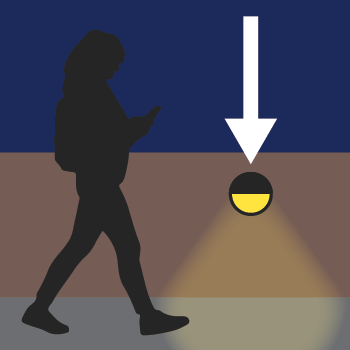
Position lighting as low as possible for its intended purpose, with lowest lumen output possible.
Keep it long:
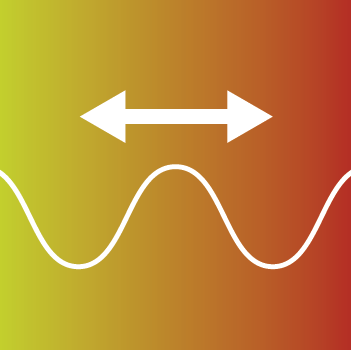
Wavelengths of light should be 560 nm or longer – amber to red.
Keep it shielded:

Light should be completely downward directed with light source or glowing lens shielded from the beach.
Kenall’s amber lighting supports Legrand’s Corporate Social Responsibility commitment, which includes sustainable development for life on land and life below water. Protecting the habitat of endangered sea turtles helps protect them from extinction—a goal we proudly support. At Kenall, we’re committed to lighting the way for a better tomorrow, today.