
570 nm Narrow Spectrum Lighting
Lighting for Photosensitive Manufacturing Applications
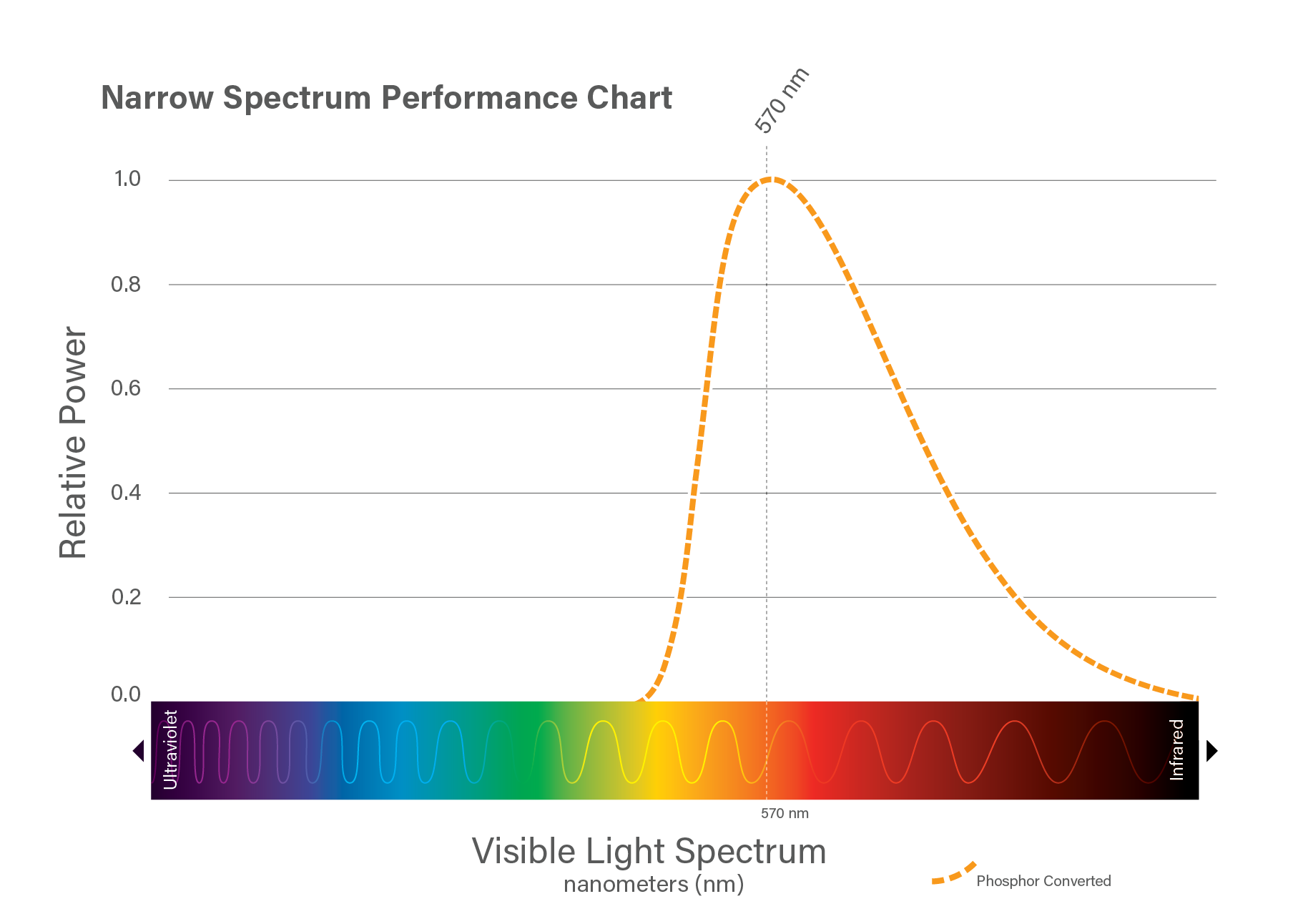
It is well-known that UV light is damaging...but even normal white light contains some damaging shorter wavelengths. Therefore, life sciences and manufacturing use Amber LED Lighting to avoid negative outcomes resulting from overexposure to the shorter wavelength found in ordinary light.
Amber Lighting for Semiconductor Manufacturing
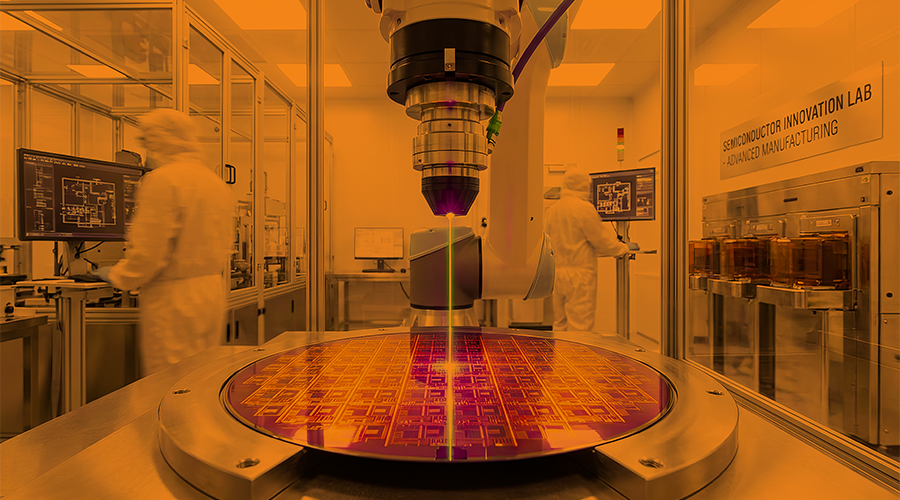
Amber lighting is used where photosensitive processes are being used. This special amber light, or 570 nm, is used in applications where photochemically sensitive materials are being used or manufactured to prevent inadvertent exposure to damaging UV and blue light. A perfect application for Amber LED lighting is semiconductor manufacturing.
Intel’s CORE-I7 processor chips, for instance, are built with circuitry measuring 14 nanometers — half the size of a virus. Manufacturers use lithography, a printing process similar to photography, to make such small circuits. Coatings or emulsions are placed on the product surface and a positive or negative image of the desired structure is miniaturized and projected onto the substrate using UV light. The UV light changes the coating into a solid, allowing the unexposed area to be washed away. The resulting hardened structure is typically just one layer of many within a semiconductor that makes up the circuit pathways or transistors. Using amber light prevents premature hardening of the coatings, improving quality and yield.

Amber Lighting for Medical Research & Treatments
Amber Lighting also protects sensitive biological work, research and medical treatments. Although ordinary light does not have a negative effect on large organisms, it can damage DNA or create unwanted chemical reactions in individual live cells. The smaller the structure, and the more exposed to ordinary light, the more negative effects can be seen. The restricted spectrum of light found in Amber light helps provide improved outcomes during invitro fertilization and stem cell transplant work. Amber light also protects pharmaceuticals during manufacture and storage. UV and some short-wavelength visible light can create unwanted chemical reactions, prematurely degrading medications.